

Specialized Centers
Center for Tobacco Addicts

INFORMATION FOR PATIENTS
Congratulations on your decision to quit smoking. Your desire and your firm decision are absolutely crucial for your success. The intensity (degree) and duration of the difficulties that may accompany quitting smoking also depend on how you identify with the idea that you WANT to wake up as a non-smoker one day. However, this difficult period only lasts a few weeks or months, and the difficulties can be alleviated with medication. However, no medication or doctor will stop you from smoking, so your firm decision is necessary.
At our Center, we start with an initial visit (screening), where you will be examined for approximately 1-1.5 hours and your level of addiction to cigarettes (nicotine) will be determined. The basic examination includes measuring blood pressure, pulse, anthropometric data (height, weight, body mass index calculation, waist circumference, or % body fat or basic lung function). We will ask you about what illnesses you have had, what medications you regularly take. You will complete psychodiagnostic tests and we will measure CO in your exhaled air, including determining % carbonyl hemoglobin (= % of red blood cells blocked by carbon monoxide for oxygen transport) - this way we can estimate the intensity of your smoking.
If you really want to quit smoking and agree to the treatment plan, you can make an appointment for an initial visit. It will take about 2 hours. Some examinations will be repeated. Above all, you can meet other smokers who, like you, have decided to quit smoking. We will explain the principle of this addiction - even though you are certainly familiar with it. It will help you if you are aware of some of the connections. We will try to inspire you to prepare alternative solutions in advance, how to experience your typical smoking situations without a cigarette, how to change your daily habits, how to experience the day. You can also learn from your own previous failures: In what situation did you light up? What will you do now in a similar situation to resist a cigarette? If you have not smoked for a long time, you probably have the experience that a single cigarette (Will I like it? What will it do to me?) returned you to smoking within a few days, even after years - such an experience is valuable. It can also help you to know that you have decided to give up cigarettes forever and completely, to erase them from your life. We will try to help you to be happy with such a decision and not to remember cigarettes nostalgically, as something beautiful that you poor people were deprived of, not to regret it. On the contrary, the fact that you have finally gotten rid of cigarettes should be perceived positively, as a relief. After all, it is what you have wanted for years. We will give examples of non-smoking solutions to situations typically associated with cigarettes (coffee, food) - but the actual instructions will be up to you. You will also set the D-day yourself.
Changing your lifestyle, changing your learned behavior is therefore entirely up to you. However, you can use medication to suppress withdrawal symptoms. Withdrawal symptoms include: urge to smoke, bad mood/depression, irritability/anger, sleep disturbances, lack of concentration, inability to rest, anxiety, increased appetite. Withdrawal symptoms are when they appear or worsen after you stop smoking – not if they accompany you your whole life. Medication will not stop you from smoking, but for at least three months, when you should take them, they will make the transition to a life without cigarettes easier. It is usually advisable to take medication for longer (6 months or more).
You and your doctor will discuss specific medications and dosages to help you manage withdrawal symptoms from nicotine withdrawal. If you wish, you can bring a friend to this visit (and any subsequent visits) to support you in your efforts to quit smoking.
The follow-up visits will be shorter, around 30 minutes. The first follow-up visit (i.e. the third in total) should be about a week after the D-day. In the case of taking medication, then every 2 weeks for three months, otherwise by agreement. Then we would like to see you 6 months after the D-day and the last time after a year since the last cigarette: only then can we say that you have really stopped smoking. During the follow-up visits, we will repeat some basic examinations (blood pressure, pulse, CO in exhaled air, weight, possibly others) and we will always ask you about withdrawal symptoms. We will adjust the type, amount and duration of medication use according to the progress.
Tobacco addiction is a disease that is not easy to get rid of. Reduced self-esteem and a feeling of inferiority associated with not having quit smoking are typical for most smokers. You may not succeed the first time: but if you still want to quit smoking, you have come to the right place. Come, even if you have not been able to quit - that is why we are here to support you in your next attempts to quit smoking and to help you find the positive in your failure, namely a lesson on how to withstand a similar situation the next time and overcome it without a cigarette.
If you would like a completely private consultation, we can accommodate you - please let us know your wish. However, sharing your smoking-related problems together is generally welcome and beneficial for all parties (we will not ask you about personal information - past illnesses or medications).
You do not pay for treatment at our Center (except for the regulatory fee), you only pay for the medication to suppress withdrawal symptoms at the pharmacy. But what you have to invest in treatment in any case is your firm decision and your time. You did not learn to smoke overnight, it took months or years. Therefore, be patient even when going the opposite way and believe that investing in quitting will be worth it.
We wish you success in your decision.
For our center: prof. MUDr. Eva Králíková, CSc., MUDr. Lenka Štěpánková, PhD., doc. MUDr. Alexandra Pánková PhD., MUDr. Kamila Zvolská, PhD., MUDr. Zuzana Adamčeková, sisters Bc. Pavlína Hrdinová, Lucie Spurná and Stanislava Kulováná
Contact information
-
 Karlovo nám. 32, 128 08 Prague 2 (Faculty Polyclinic, building C1, 2nd floor)
 -
 +420 | 224 966 608 |

Office hours
| Monday | 07:00 – 16:00 |
|---|---|
| Tuesday | 07:00 – 16:00 |
| Wednesday | 07:00 – 16:30 |
| Thursday | 07:00 – 16:00 |
| Friday | 07:00 – 13:30 |
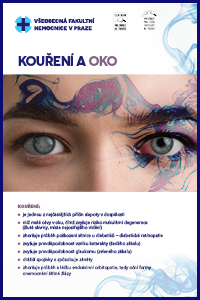
Smoking and the eye |
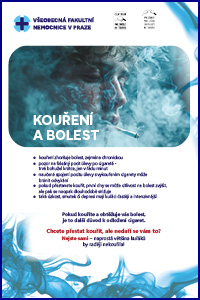
Smoking and pain |
|
 |
 |
|
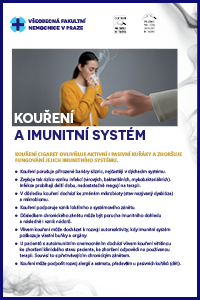
Smoking and the immune system |
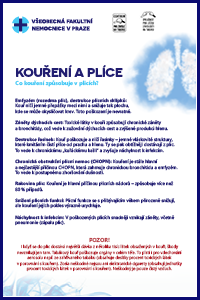
Smoking and lungs |
|
 |
 |
|
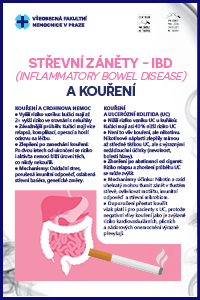
Smoking and intestinal inflammation |
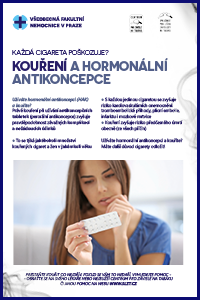
Smoking and hormonal contraception |
|
 |
 |
|
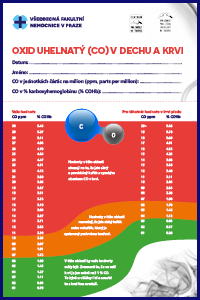
Smoking and carbon monoxide in breath and blood |
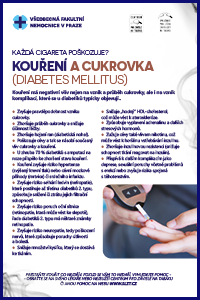
Smoking and diabetes |
|
 |
 |
|
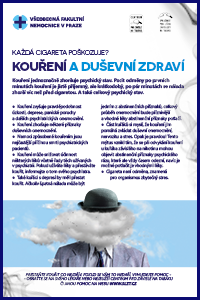
Smoking and mental health |
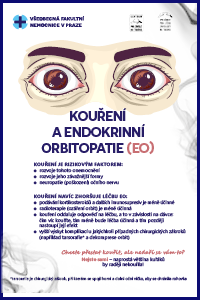
Smoking and endocrine orbitopathy |
|
 |
 |
|
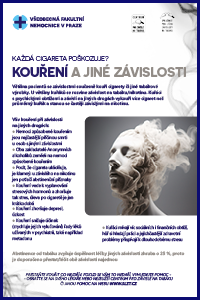
Smoking and other addictions |
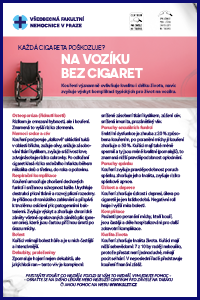
On a cart without cigarettes |
|
 |
 |
|
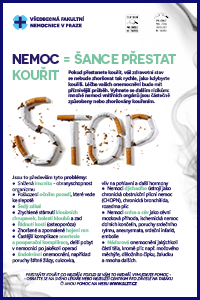
Smoking and disease |
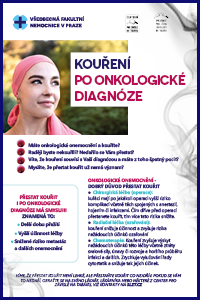
Smoking after an oncological diagnosis |
|
 |
 |
|
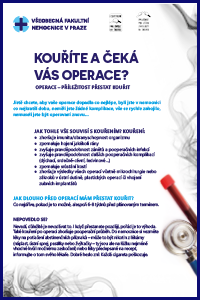
Smoking and surgery |
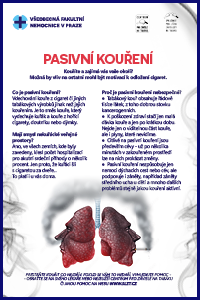
Passive smoking |
|
 |
 |
|
Smoking and rheumatological diseases |
Smoking and multiple sclerosis |
|
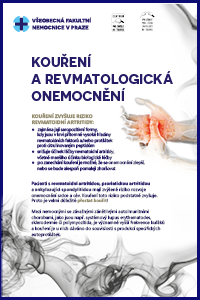 |
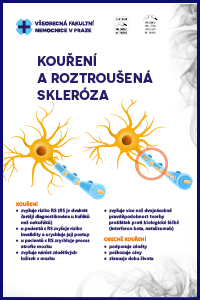 |
|
Smoking and cardiovascular disease |
Smoking and pregnancy |
|
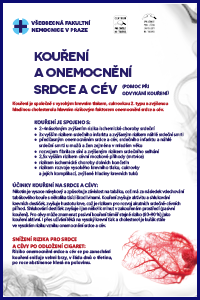 |
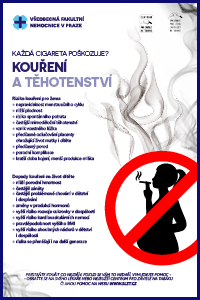 |
|
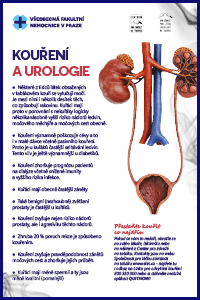
Smoking and urology |
Basic terms around tobacco and nicotine |
|
 |
 |
|
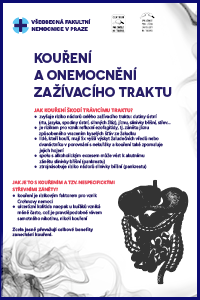
Smoking and diseases of the digestive tract |
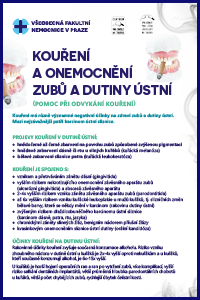
Smoking and diseases of the teeth and oral cavity |
|
 |
 |
|
Smoking and stress |
||
 |